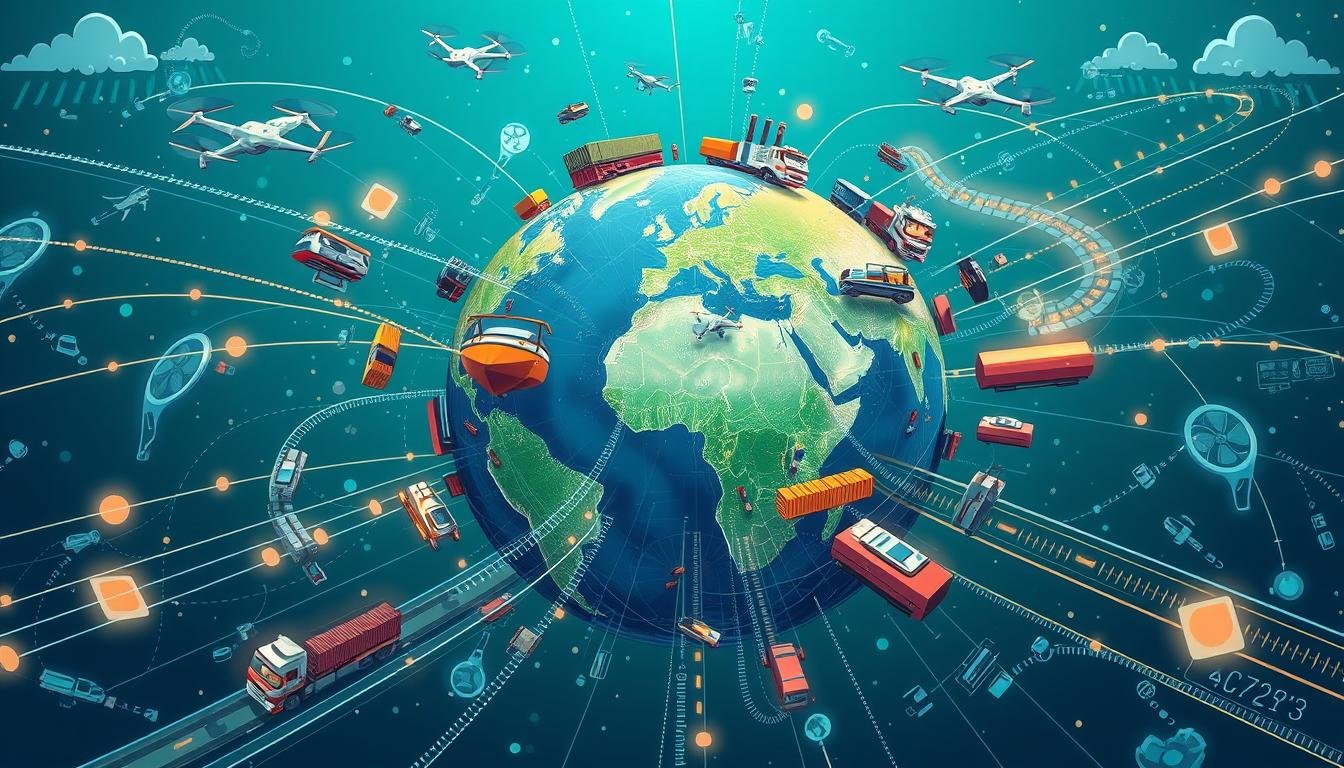
The pace of digital transformation doesn't seem to be slowing down. From how businesses conduct their business to the way people interact with their surroundings, technology continues to reshape nearly every aspect in modern life. Some of these transformations are in the making for a long time and are now achieving the point of critical mass, whereas others have exploded in speed and caught entire industries off guard. It doesn't matter if you're working in technology or are simply living in a global society increasingly influenced by it, knowing where things are in the future gives you a significant edge. Here are the top ten digital technologies that matter the most heading into 2026/27 and beyond.
1. Artificial Intelligence Moves From Tool To TeammateAI has moved from being something of a novelty or a tool to become something that is integrated. Across industries, AI systems now operate as active participants rather than passive assistants. When developing software, AI can write and edit code along with engineers. For healthcare, AI detects an anomaly in diagnosis that the human eye might overlook. When it comes to content creation, marketing, Legal services and marketing, AI can handle initial drafts and routine analysis in order that human experts can focus on higher-order thinking. The shift is less about replacement, and more about changing what human work is when the repetitive layer is automated.
2. The Development Of Agentic AI SystemsThe next step in the evolution of AI assistants agentsic AI is a term used to describe systems capable of planning as well as executing multi-step processes autonomously. Rather than answering to a single message the systems break down complex goals, determine a course of action, utilize a variety of tools and data sources, and carry to completion without constant input from humans. This is for businesses. AI which can control workflows that conduct research, handle emails, and maintain systems with minimal oversight. For ordinary users, it means digital assistants that actually get things done rather than just answer questions.
3. Quantum Computing Enters Practical TerritoryQuantum computing has been within the realms of theoretical potential. This is changing. Although quantum computers that are universal remain still in the process of being developed however, the specialized systems are starting to demonstrate real advantages in drug discovery, materials sciences, logistics optimization and financial modelling. The major technology companies and the national government bodies are rapidly investing in quantum technologies, and the competition to create a commercial advantage is increasing. Companies that are keeping an eye on this will be better placed when the technology matures fully.
4. Spatial Computing As well as Mixed Reality Expand Their FootprintFollowing the commercial launches of high-profile mixed reality headsets, spatial computing is gaining practical applications that go far beyond gaming and entertainment. Architecture firms use it to provide deep design critiques. Surgery professionals practice complex procedures in virtual environments. Remote teams collaborate within multi-dimensional shared spaces. As hardware gets lighter and cheaper, spatial computing is set to be an established method of how digital data is accessible or navigated on both in professional and everyday settings.
5. Edge Computing Brings Processing Closer to the sourceCloud computing transformed what was possible by centralising processing power. Edge computing is now decentralising it again, and for good reason. In processing information closer to the place it's generated, be that in a factory's floor, an hospital ward, inside the vehicle that is connected edge computing can cut down on time to response, improves reliability and decreases the bandwidth requirements for constant cloud communication. In the case of applications where real-time reaction is essential, from autonomous vehicles to manufacturing automation, to intelligent infrastructure for cities edge computing will become increasingly essential.
6. Cybersecurity develops into A Continuous DisciplineThe threat environment has become too rapidly and too complex for the old model of periodic audits and reactive patching. In 2026/27, serious organizations will treat cybersecurity as a continuous corporate discipline, rather than an IT department's responsibility. Zero-trust infrastructure, based on the assumption that no user or system is trustworthy in default, is becoming common practice. AI-driven systems monitor networks in real-time and detect anomalies before they become attacks. Humans are one of the most vulnerable vulnerabilities, so security education and culture just as crucial as technical solution.
7. Hyperautomation Joins The Dots Between SystemsHyperautomation makes use of AI machine learning, machine learning and robot process automation to find and automate entire workflows instead than just isolated tasks. Like simple automation it examines the linkage between the systems that used to require human co-ordination and removes that barriers completely. Businesses ranging from banking and insurance up to management of supply chains and public sector services are finding how hyperautomation not only cut costs but fundamentally changes how an organization is capable of delivering with speed.
8. Green Tech And Sustainable Digital InfrastructureThe environmental impact for digital infrastructure is undergoing increasing attention. Data centers consume huge amounts of electricity. Additionally, the rapid growth of AI training applications has increased that use to a much higher level. In response, the sector is investing in more efficient machines, renewable-powered facilities coolant systems that are liquid, and smarter approaches to managing workloads. For companies with ESG commitments, the carbon footprint of the technology they use is not something that should remain in the background.
9. The Democratisation Of Software DevelopmentAI-powered low-code and no-code platforms are making software development more accessible to the easy reach for those without a formal programming experience. Natural interfaces for language and visual development environments mean domain experts can create functional software which automate complicated processes and even integrate systems of data without dependence on external developers. The pool of people skilled at creating digital solutions is growing quickly, and the implications for business agility and creativity are huge.
10. Digital Identity And Data Sovereignty Are Taking Center StageWith the increasing use of technology as we move into the digital age, questions about who owns personal information and the methods of verifying identity online are becoming more central than secondary concerns. Identity frameworks with decentralisation, privacy-preserving technologies, and stronger data portability rights are all increasing in popularity. Governments and platforms alike are pushing towards methods that give users more authentic control over their digital identities and clearer visibility into the way in which their data is utilized. It is a direction that has been decided, although the exact route remains undetermined.
The trends above are not isolated developments. They feed off and speed up one another which creates a digital landscape in rapid change at any previous point in history. Staying informed is no longer just useful for technologists. In a digital world driven by digital influences, this is becoming more pertinent to anyone. To find more context, browse some of these respected nyhetskanalen.nu/ for more detail.
 Top 10 Social Platform Trends Shaping Society In 2026
Social media is now in the fabric of our lives that distinguishing its impact from the larger culture is increasingly difficult. It shapes how people form opinions and build identities, consume entertainment, follow the news, form relationships and even participate in public affairs. The platforms themselves are advancing quickly, driven by competition, regulation and the relentless desire to attract and hold the attention of people. What we are seeing in 2026/27 is a media landscape that is a lot more fragmented more AI-driven, and crucial than at any earlier date. Here are the ten social media trends influencing culture heading into 2026/27.
1. AI-Generated Content Fills Every PlatformThe number of AI-generated posts on social media platforms has reached an extent that is fundamentally changing the current information landscape. Images, videos and written posts and entire accounts producing synthetic content at machine speed are available on each major platform. These implications range from relatively benign, AI-assisted creators creating more content in a shorter time or the highly destructive, synthetic misinformation, fabricated personas and artificial consensus operating at a speed which human moderators cannot keep up with. The ability to distinguish artificially generated content from human-generated material is becoming a technical issue and a valuable cultural skill.
2. Short-Form Video Remains Dominant But EvolvesShort-form video has established itself as the most popular format for content in the present era, and this will be the case in 2026/27. What is evolving is the sophistication of the content as well as the viewers who consume it. Creators are experimenting with more sophisticated styles within the short-form constraints and people are showing growing interest in more substantial material that uses the format with care instead of just focusing on the first three seconds of their attention. The platforms themselves are trying out with longer formats as well as more engagement techniques as they attempt for ways to transcend scroll to create the kind of ongoing time-on the platform that results in economic value.
3. The Creator Economy develops and It StratifiesThe market for creators has expanded into a significant economic sector, but the distribution of its rewards has gotten more uneven. A relatively small number of creators in the top tier of the focus economy make large amounts of income, while the majority of the middle tiers struggle to turn audience interest into sustainable income. Platform algorithm changes, growing the level of saturation of content, as well as the problem of standing out an environment that AI is able to replicate content at the surface with no cost increasing the pressure on middle-tier creators. Most resilient companies for creators in 2026/27 will be those that are built around genuine community, a distinctive views, and direct commercialisation strategies that minimize dependence on the platform's algorithms.
4. Alternative Platforms and Decentralised Platforms Gain GroundIn the wake of disillusionment from centralised platforms, driven by concerns about algorithmic manipulation, data privacy, content inconsistent moderation, and the concentration of power in a comparatively small handful of technology companies is fuelling the growth of alternative and decentralised social networks. Social networks with federation based on free protocols, niche community platforms targeting specific interests, and subscription-based models that align platform incentives with value for users and not advertiser needs have been able to find audiences. They have enormous capacity advantages, but their ecosystem is growing in a meaningful way more diverse.
5. Social Commerce Becomes A Primary Shopping ChannelThe integration of commerce directly into feeds on social media along with live streams and creator content has produced an influx of shoppers that is particularly pronounced among young people. Social commerce, which is about discovering and purchasing products without leaving an account, is growing quickly across every major social channel. Live shopping options, initially developed in Asia and now expanding globally include retail and entertainment with a focus on conversion rates and high engagement. For brands, the influencer-influencer relationship has evolved from awareness campaigns into an indirect sales channel that has tangible revenue attribution.
6. Raw Content And Authenticity Resist PolishA reaction against years filled with highly-produced, aspirationally designed social media content is giving rise to a craving for rawness genuineness, spontaneity, and imperfections. Creators who publish un edited moments, express genuine uncertainty, and lives that appear more like a person than impossible are attracting audiences that polished media is increasingly struggling to attain. This isn't an outright rejection of quality but an adjustment of what quality refers to in an environment where authenticity itself is becoming a source of competitive advantage. The fact that authenticity in its raw form can be made as meticulously designed like any other type of content is not lost on the most self-aware corners of internet.
7. Mental Health And Platform Design In the face of greater ScrutinyThe link between social media use and psychological health specifically among children, continues to generate significant research, regulatory focus, and public discussion. Age verification demands, screen time tools algorithms that require transparency and restrictions on certain recommendations for content are getting implemented or are under consideration across all major jurisdictions. Platform design choices that exploit the psychological vulnerabilities of users to boost engagement are under scrutiny and is beginning to result in real change in the manner that products are developed and managed. The gap between what platforms are aware of about the implications of their design choices and what they share publicly remains a key point of debate.
8. Community and Interest-Based Spaces Increase in importanceAs the broad public grid model for social media in which all users post to every person about all things, has revealed its limitations in the areas of contamination, polarisation, as well as the noise that comes with it, small and more particular community spaces are gaining in appeal. Discord servers, subreddits Substack communities or private chats and niche forums organised around specific areas of interest or identity are where numerous people are finding online connection and interaction they're used to from all-purpose platforms. This shift is indicative of a greater appreciation that the scale which creates platforms is also what creates a difficult environment for genuine community to develop.
9. Political And News Content Faces Platform RetreatMany major social networks are making deliberate choices to reduce the prominence of news and political articles in their recommendation algorithms due to the dangers and moderating burden it generates relative to the user experience. The implications for public discourse or journalism, as well as political communication are significant and highly debated. For news organisations that built distribution strategies around online referrals, this retreat poses a significant problem. Political actors, who are used to making use of platforms as direct communication channels, it is prompting a reconsideration of their digital strategy. The bigger question of what role social media platforms are expected to play in the democratic information ecosystems is completely unanswered.
10. Digital Identity and Reputation Online Become Long-Term AssetsThe building of a web existence over a long period of time is becoming something that individuals have to manage with greater precision. Digital identity, which is the extent of what an individual has posted, shared more hints and built and shared across platforms, carries real-world consequences for careers, relationships as well as opportunities that were not properly understood before social media became a thing of the past. The managing of online reputation including sharing in the first place, what to curate, which content to delete, and how to build a consistent and trustworthy online presence as time passes, is becoming an everyday skill, rather than a matter reserved for professional or public figures in media-facing roles. The longevity and searchability of online content means that choices made casually in one context could be brought back in another with consequences that are difficult to anticipate.
The digital world in 2026/27 will be stronger, more volatile as well as more influential than at any point in its brief history. These trends indicate a world in flux that is being redefined by regulators, platforms, creators, and users at the same time. Being able to navigate it effectively, whether as an individual or a business or as a society is more complex in comparison to what the initial utopian conceptions of social media that was necessary. For further info, visit a few of these trusted dagensvinkel.se/ and get expert analysis.